RivalFed
I shipped it, got 5 signups, and stopped.
Shipped · SaaS · Stopped June 2026 · still live
rivalfed.com · still live, no longer updated (opens in a new tab)
The short version
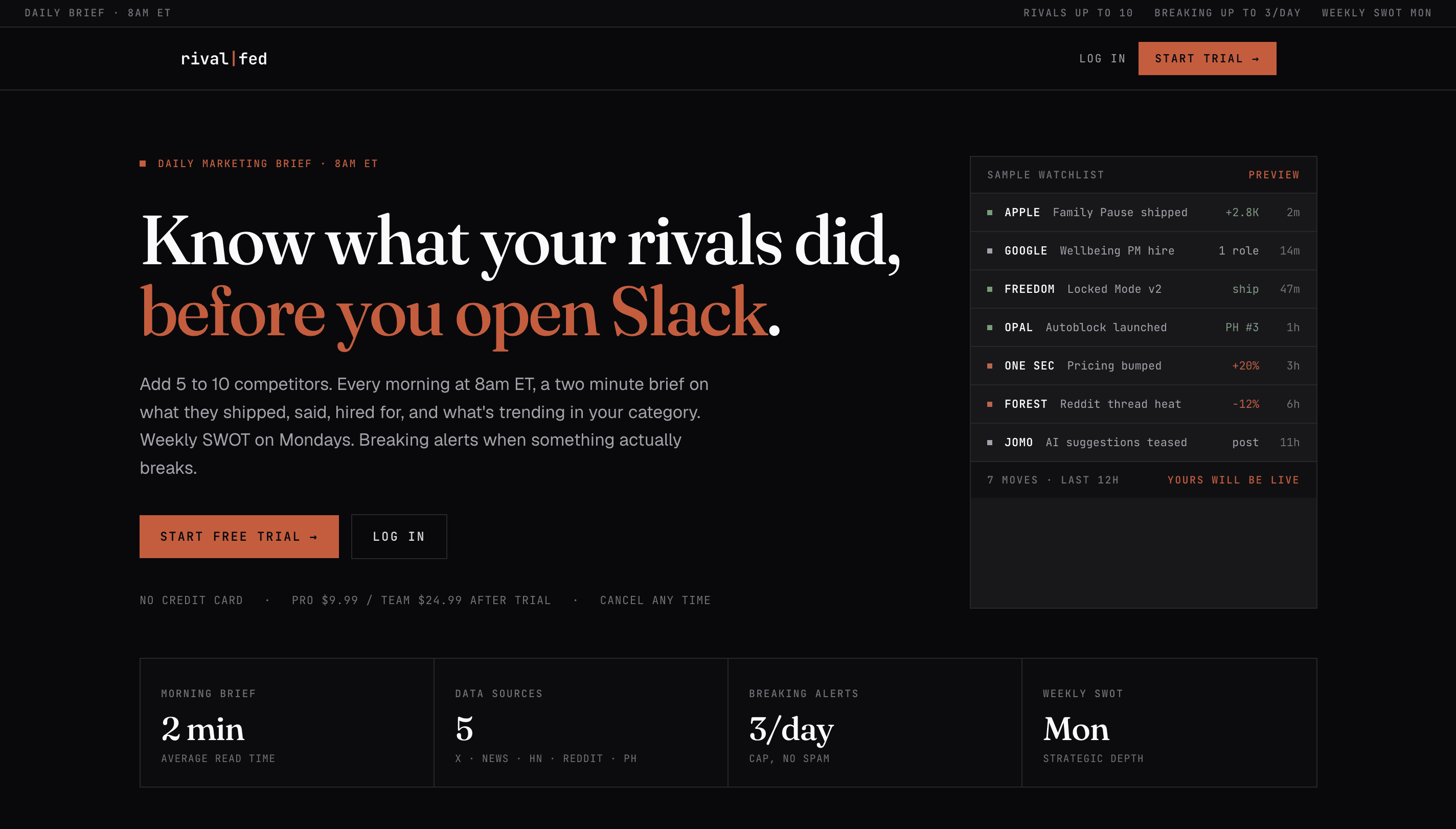
A daily 8am email briefing on what your competitors shipped, posted, and hired for, plus a weekly SWOT and capped breaking alerts. I built it to stop my own doom-scrolling and launched it with pricing and a free trial. Five friends signed up, but none of them track competitors or build products, so they couldn’t tell me if it was worth paying for. When Claude’s scheduled tasks made the core job easy to do yourself, I stopped building.
- Role
- Solo: research, product, design, build
- Timeline
- Launched April 2026 · stopped building late June 2026
- Outcome
- Shipped live with pricing and a free trial. Five friends signed up. No one paid. I stopped building in June 2026; the site is still live.
The itch
I checked competitors on Reddit, X, and Instagram for new launches, and for new AI tools that could help me. But I’d get distracted and end up scrolling Instagram.
Checking competitors was pulling me into doom-scrolling.
So I built something to do the checking for me.
The build
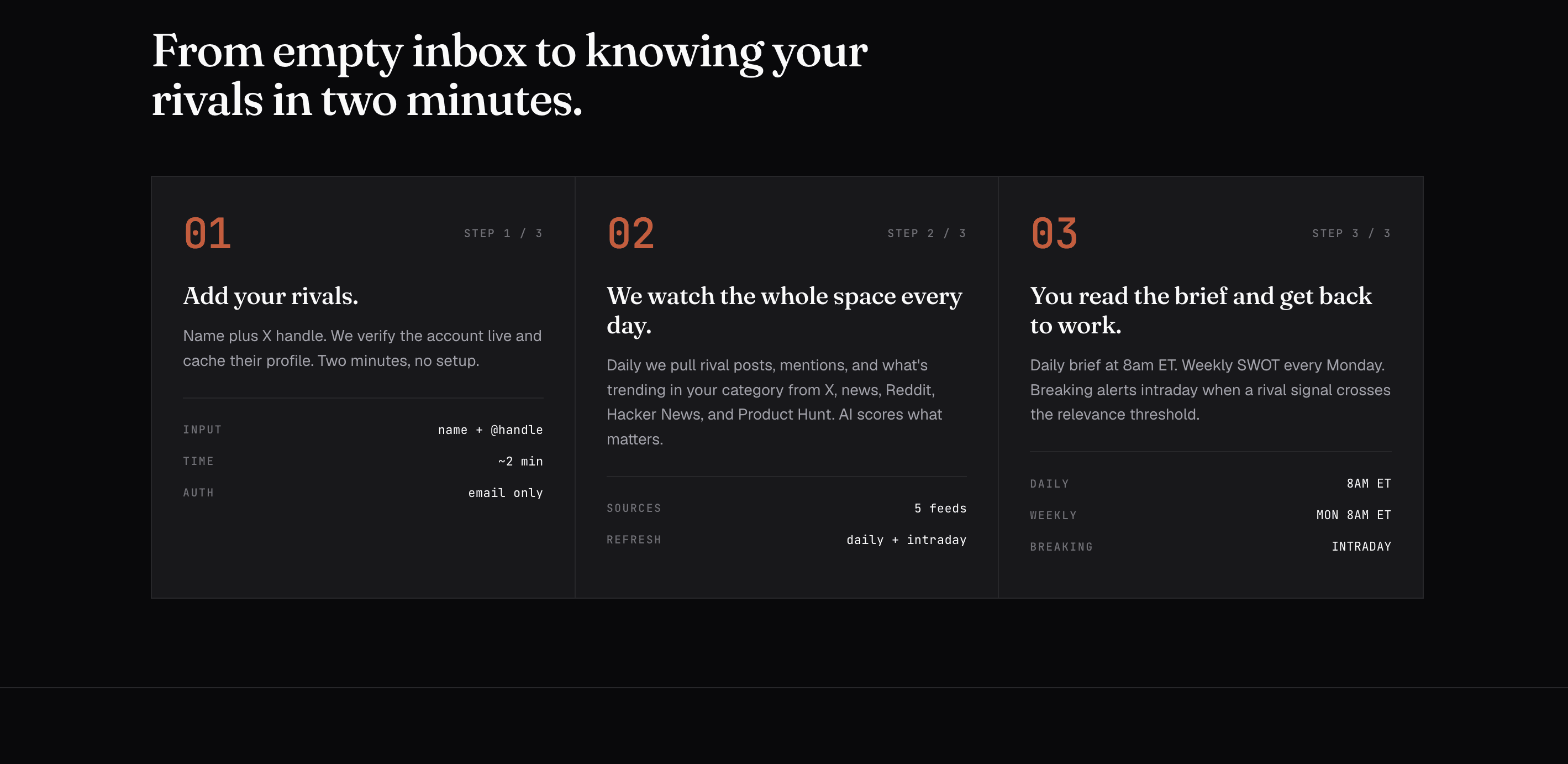
RivalFed checks on your competitors for you. You add your rivals, and it sends:
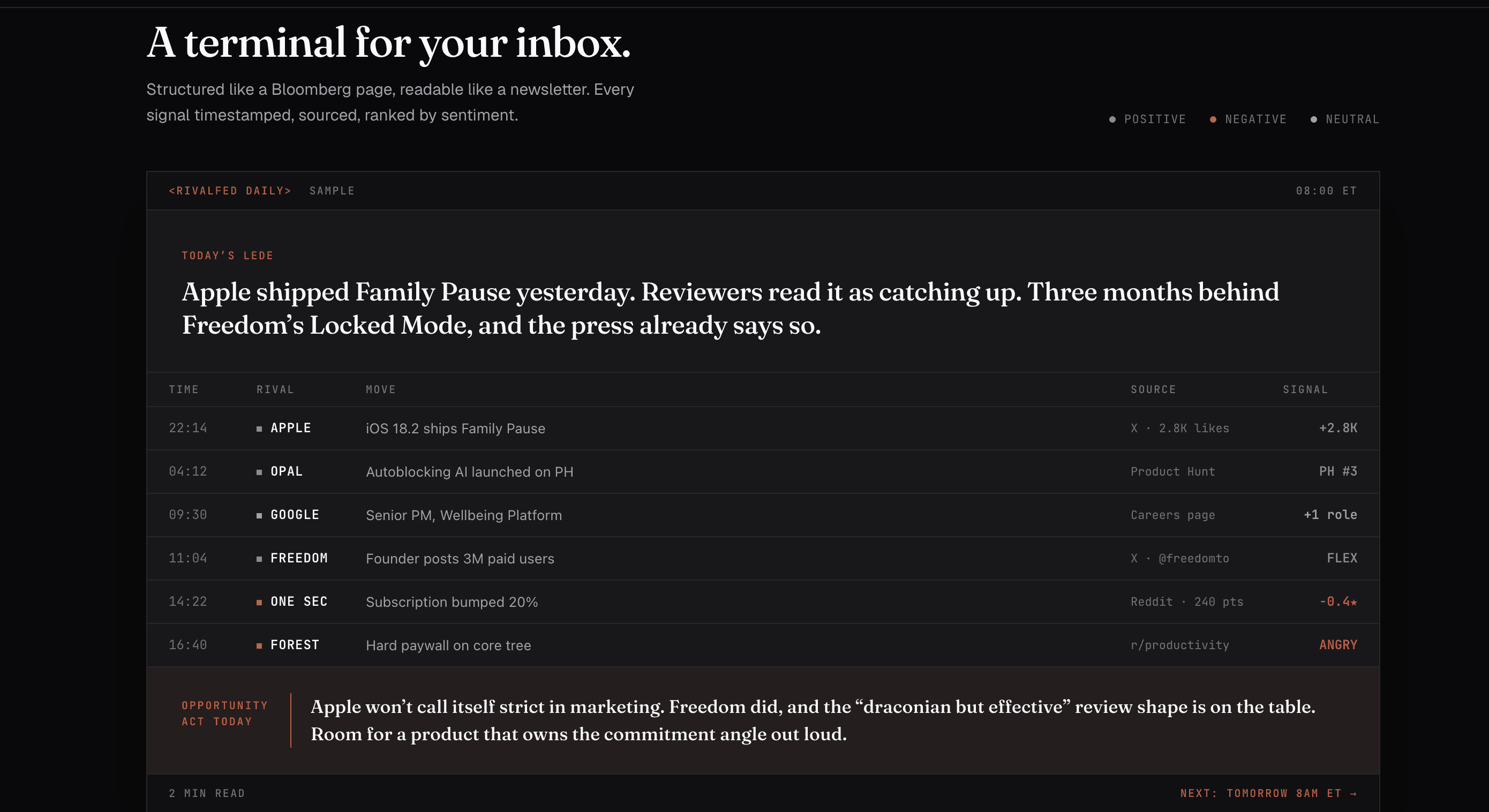
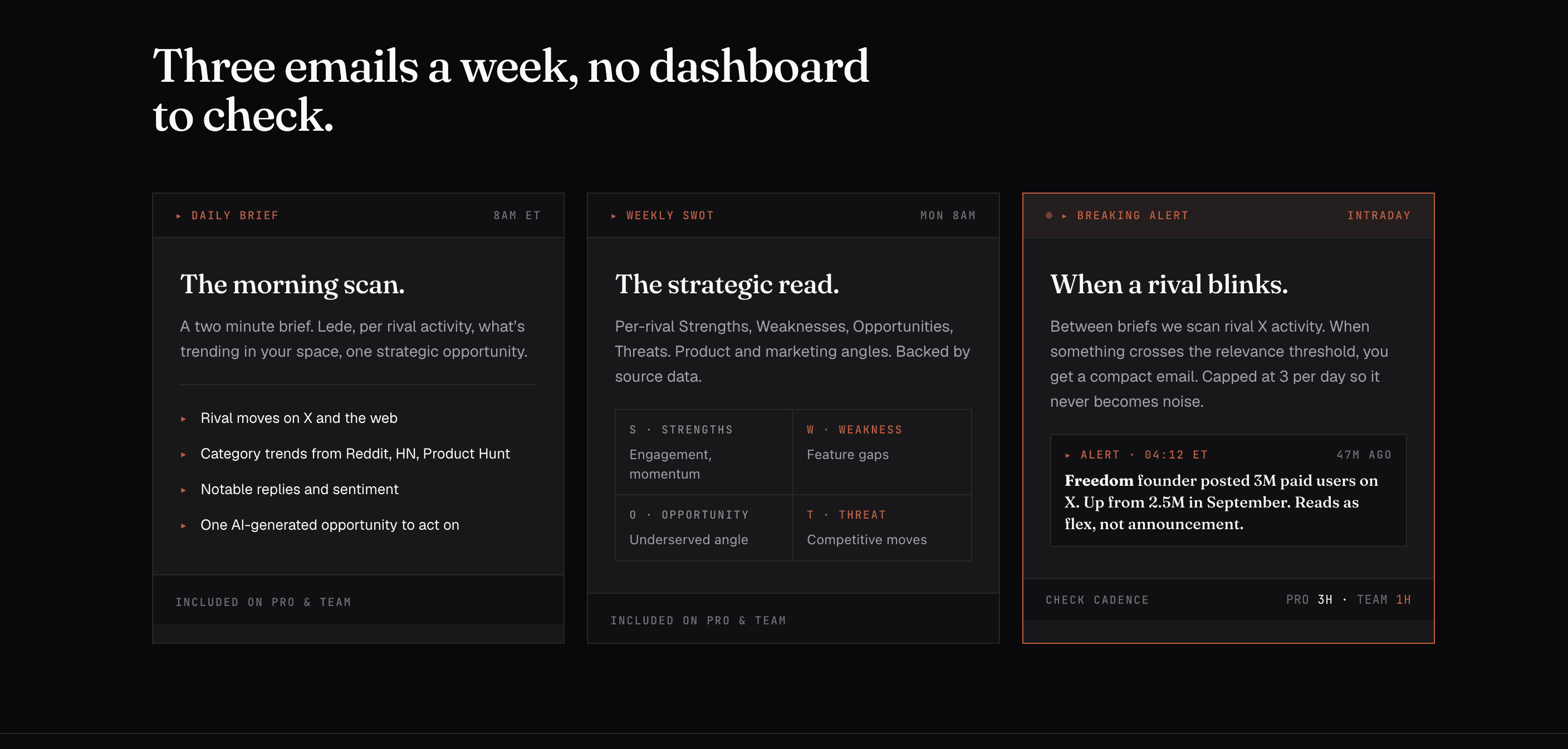
- A daily brief at 8am ET: what they shipped, said, and hired for, in about two minutes
- A weekly SWOT every Monday: strengths, weaknesses, opportunities, and threats for each rival
- Breaking alerts, capped at 3 a day: only when something crosses a relevance threshold
It launched live with pricing and a free trial: Pro at $9.99 and Team at $24.99 after the trial, no credit card to start.
Daily brief
How it works
Building it meant guessing what people would use.
The bets
Three decisions mattered most.
The 3-alert cap. More than 3 a day is spam. Fewer, and you miss things. It also kept API costs down.
The 2-minute brief. People want to skim and get as much as they can, fast. So the brief was built for skimming.
Email instead of a dashboard. No login, nothing to open. It arrives by email, and most people read their email first thing in the morning.
The product, as emails
Launch
RivalFed went live in April 2026. I only told friends. I tried marketing on Instagram, but engagement was low.
5
Signups
Five friends signed up. No one paid.
What went wrong
My testers were friends, not founders. Founders were the people RivalFed was for.
Some friends tried it twice, but none of them track competitors or build products, so they couldn’t tell me if it was worth paying for.
Then Claude added scheduled tasks.
Why I stopped
Claude launched scheduled tasks, and I set one up myself. Every day it ranks trending GitHub repos for what I need and emails me the 5 most useful.
That’s RivalFed’s core job, and anyone could set it up themselves. So I stopped building, around late June 2026.
What I’d do differently
- Research before building.
- Ask better questions.
- Interview real target users before spending time on something nobody needed.